
Introduction
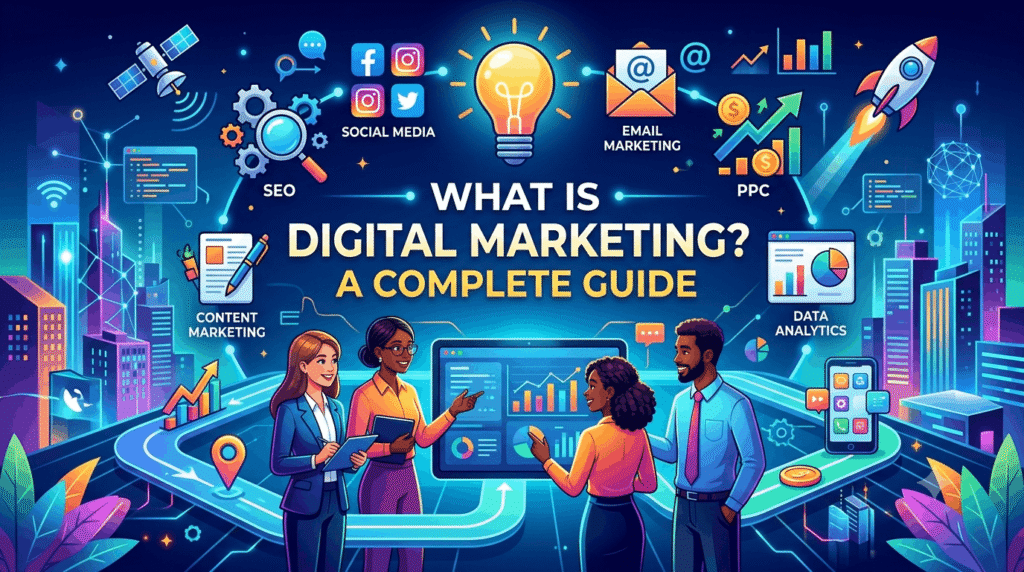
The newfound world of internet with associated growth of multiple professions, which continue to emerge on the horizon of the digital world, has opened up new vistas of skills and opportunities. The digital marketing is one of these professions which is teemed with opportunities and growth. It is an umbrella term that contains variety of frameworks of marketing through internet and electronic devices with ultimate goal of contacting the customers. The digital marketing provides robust platforms to the businesses to promote the brands, evaluate performance, target the audience through variety of channels like search engines, social media and email.
WHY IS DIGITAL MARKETING DIFFERENT FROM TRADITIONAL MARKETING?
-
TRADITIONAL MARKETING
The marketing has been in use since the centuries when the products were marketed with loud voice explaining the products’ functions and traits. With the progress of the written art, the products were marketed on the walls with beautiful writing skills and with somewhat pictorial display. The advent of printing techniques, the fliers, pamphlets and leaflets were the popular tools of marketing.
The newspapers came the next as they had wide range of potential to engage a larger number of people. The billboards and neon signs also emerged on the horizon as the advertisement world witnessed a revolution with the emergence of performing art and electronic media including motion pictures and television.
-
DIGITAL MARKETING
The digital marketing is a step ahead of all the traditional marketing tools which have been in use since the decades. It is a marked shift of the platforms from visual devices to internet based technologies like search engines, social media and emails having wide range of influence and audience.
WHICH ARE KEY TAKEAWAYS
- Traditional marketing has limited scope while digital marketing has global outreach.
- Traditional marketing requires a cumbersome long process for having feedback while digital marketing has a smart and efficient strategy with quick response.
- The traditional marketing involves a lot of funding while digital marketing is cost effective.
- The traditional marketing has no direct interaction with the valued customers while the digital marketing develops a vibrant interaction with the customers giving prompt feedback.
WHAT IS 3-3-3 RULE IN DIGITAL MARKETING?
The 3-3-3 rule in digital marketing is a strategic framework developed to cut through the information overload. Though it has certain variations on the basis of discipline, the most widely accepted standard focuses on ATTENTION, MESSAGING and TRUST. It can further be elaborated as;
- 3 seconds to grab attention.
- 3 minutes to develop interest
- 3 touchpoints to convert.
WHICH ARE TYPES OF DIGITAL MARKETING?
The digital marketing requires certain fields and skills to develop a vibrant and dynamic marketing strategy which can be discussed as;
-
CONTENT MARKETING
The content marketing is aimed at developing and enhancing brand awareness with methods like storytelling and information utilization in an expressive way. The ultimate objective of the whole practice is to engage readers and lead them to call-to-action (CTA) so that they can be converted into potential customers as the engaging content divert the attention prompting the readers to seek more information, sign up for email list or make a purchase. Content may refer to;
- Blog posts
- Resources like whitepapers, e-books
- Digital videos
- Podcasts
- Infographics
- Emails
- Press release
- Newsletters
The content should be developed and tailored in a way that should go beyond informing the audience rather it should provide value as the content marketing is aimed at developing trust and promoting value with the customers and the whole practice depends on doable actions from brand awareness to brand loyalty focusing the customers’ long-term retention.
KEY COMPONENTS OF DIGITAL MARKETING
- SEARCH ENGINE OPTIMIZATION (SEO): It involves a complete process to optimize a website for high ranking in search engine result pages such as Google to facilitate the people to find it organically.
- CONTENT MARKETING: The content marketing revolves around creating and sharing quality and relevant content in the form of blog posts, videos, podcasts, newsletter, e-book, whitepapers etc., to attract and engage a specific audience.
- SOCIAL MEDIA MARKETING: In the social media marketing strategy, the platforms lie Instagram, Facebook, Linkedin and TikTok to promote brand awareness, engagement with the customers and run targeted and curated ad campaign.
- PAY-PER-CLICK (PPC) ADVERTISING: In this advertising tool, the advertisers pay each time the aid is clicked and this model is in practice where search engine marketing (SEM) or social media is used.
- EMAIL MARKETING: Sending newsletters, promotional offers or updates to a list of subscribers to develop customer relationship and drive sales.
-
AFFILIATE MARKETING
The online marketing has gained prominence over the years and the marketing dynamics are also transforming in a big way as new avenues are opening up with a lot of opportunities. The affiliate marketing or influencer marketing gaining traction in the online marketing world.
The organizations are opting for this powerful marketing strategy to bridge the gap between consumers and organizations. The affiliate marketing is a performance-based revenue sharing model where the organizations utilize the growing popularity of industry experts and social media influencers in return for commission or share of the sale.
A unique tracking link is shared and whenever a customer purchases something or completes a specific action through the given link, a percentage of sale is paid to the marketer. The audience is engaged with posts, blogs or videos to attract more business for organizations and create new leads.
KEY COMPONENTS OF AFFILIATE MARKETING
- ADVERTISER/MERCHANT: The advertiser or merchant sells the products as the business provides inventory, handle customer service and pay the commission.
- PUBLISHER/AFFILIATE MARKETER: The bloggers, YouTubers or influencers who use their platforms to promote the products to their audience in return for commission.
- AFFILIATE NETWORK: The platforms which act as intermediaries between merchants and affiliate marketers and handle tracking, reporting and payouts.
- CUSTOMER: A customer clicks the unique affiliate link and completes a purchase.
WHICH ARE PAYMENT MODELS?
- PAY-PER-SALE (PPS): It is the most popular payment method as the affiliate marketer is paid in percentage usually 5% to 30% of the product price for each sale generated through the platform.
- PAY-PER-LEAD (PPL): In this model, the marketer is rewarded when referred user completes a specific action like filling in a contact form, signing up for a newsletter or starting a free trial.
- PAY-PER-CLICK (PPC): A small fee is paid to the marketer when a visitor is redirected to the merchant’s website and it is necessary whether the visitor makes a purchase or not.
-
SOCIAL MEDIA MARKETING
Social media marketing is based on developing a strong access to the wide range of audience through the social media platforms such as Facebook, Instagram, TikTok, YouTube, X (formerly Twitter) and Linkedin. The whole practice is aimed at creating brand awareness, engaging audience and promoting sale.
The combination and integrated actions encompassing content creation, community management and paid advertising focus on developing seamless and long lasting engagement with the consumers directly.
KEY COMPONENTS OF SOCIAL MEDIA MARKETING
- CONTENT: The curated and tailored posts, videos and stories are created for developing engagement and communicating the value.
- COMMUNITY: An interactive synergy is created by interacting with the followers, responding to the comments and developing strong bonds with the customers.
- CAMPAIGNS: The targeted and specific initiatives such as running paid ads or coordinating with influencers are taken to achieve business targets.
WHY IS SOCIAL MEDIA MARKETING PREFERRED?
-
MASSIVE OUTREACH:
The social media has billions of active users across the globe and these platforms offer massive access and easy approach to the specific demographics based on behaviors and interests.
-
DATA AND TRACKING:
The social media platforms have integrated system that provides analytics for the brands to track website traffic, generate leads and find return on investment (ROI).
-
BRAND TRUST:
The social media marketing develops a reciprocal system for the brands as interaction with the customers is the key factor that ensures transparency and accountability and thus passive consumers become advocates with utmost loyalty.
-
EMAIL MARKETING
All the social media marketing is based on direct approach to the audience but the email marketing is specifically personalized, direct and targeted campaign that has very specific message to be conveyed to a specific audience.
It is all about sending commercial messages, updates and promotional material directly to the subscribers’ list. This email marketing strategy is very effective in informing the customers, developing brand loyalty and driving sale.
KEY COMPONENTS OF EMAIL MARKETING
- SUBSCRIBERS LISTS: Instead of sending random and unsolicited spam messages, email marketing has an opt-in list that is based on the people who have given their email address with their free will and permission to contact them.
- EMAIL SERVICE PROVIDERS (ESPS): The marketers utilize the dedicated platforms such as Mailchimp or Brevo to manage contacts, design campaigns and automate messages instead of using personal email clients.
- SEGMENTATION: The email marketing has also been revolutionized by setting the specific targets as in the modern era, the marketers do not prefer mass, one-size-fits-all emails rather group from the lists based on demographics, purchase history or customers’ history to email highly personalized and relevant content.
WHICH ARE TYPES OF EMAILS?
- WELCOMING EMAILS: An automated and ready-to-send message is emailed when someone subscribes and the practice is aimed at introducing the brand.
- NEWSLETTER: The company updates, educational content or industry news are sent through regular and curated emails on weekly or monthly basis.
- PROMOTIONAL EMAIL: The discounts, new arrivals or time-bound offers are emailed through a campaign to drive sale.
- TRANSACTIONAL EMAIL: The customers’ action like order confirmations, shipping updates or password resets automate the utility emails.
-
PAY PER CLICK (PPC) ADVERTISING
Pay-per-click (PPC) is a model of digital advertising as in the marketing campaign, the businesses pay a fee each time a user clicks on the ad. The advertisers essentially buy targeted visits to their website or landing page instead of earning organic traffic. Google Ads is the most popular and common platform where ads take a prominent position at the top of search results.
KEY COMPONENTS OF PPC ADVERTISING
- SPECIFIC KEYWORDS: The advertisers typically make a bid on specific keywords that their target audience is searching for.
- AUTOMATED AUCTION: As soon as a user types a query with those keywords, an automated auction determines which ads are displayed based on factors such as bid amount and ad quality.
- CLICKING AD: When a user clicks an ad, the business pays the publisher, Google or a social media network, the agreed amount.
TYPES OF PPC ADVERTISING
- PAID SEARCH ADS: The text based ads appear at the top or bottom of SERPS (Search Engine Results Pages) when the users search for specific products or services.
- SOCIAL MEDIA ADS: The sponsored posts or visual ads on platforms such as Facebook Ads, Instagram, Linkedin and TikTok targeted to specific users; demographics.
- DISPLAY AND VIDEO ADS: The banner ads on different websites or video ads displayed before the content on platforms like YouTube.
WHICH ARE THE BENEFITS OF PPC ADVERTISING?
- INSTANT TRAFFIC: The PPC advertising gives an instant traffic contrary to Search Engine Optimization (SEO) which requires intervening time to build organic traffic.
- SPECIFIC TARGETS: The PPC is a curated and specific campaign to have an outreach to specific locations, age groups, devices and search intent.
- MEASURABLE RESULTS: The metrics like Cost-Per-Click (CPC), impressions and conversations can be tracked to make an analysis of Return on Investment (ROI).
-
INFLUENCER MARKETING
The influencer marketing is based on social media strategy where the brands enter into partnership with the individuals having dedicated and engaged following for promoting their products or services. This model operates like a trustworthy word-of-mouth making use of established credibility and relationship the influencer has with the specific and targeted audience.
KEY COMPONENTS OF INFLUENCER MARKETING
- INDIRECT MARKETING: The brands collaborate with creators on social media platforms such as Instagram. TikTok or YouTube for brand awareness instead of direct marketing to a brand audience.
- SPONSORED CONTENT: The influencers create sponsored content like product reviews, tutorials or lifestyle posts to promote the brands.
- TARGETED CAMPAIGN: The influencer marketing offers a targeted campaign as the brands tap into highly targeted and niche communities.
WHICH ARE TYPES OF INFLUENCERS?
- MEGA INFLUENCERS: The celebrities and renowned internet stars having millions of followers are mega influencers as they are the best choice to have an access to a massive audience and develop brand awareness.
- MICRO-INFLUENCERS: The influencers with 100K to one million followers fall in this category as they have broader appeal mixed with decent niche expertise.
- MICRO-INFLUENCERS: These influencers have 10K to 100K following and have the highest engagement rates as they build strong trust with dedicated community.
WHICH ARE BENEFITS OF INFLUENCER MARKETING?
- TRUSTWORTHY AND AUTHENTIC: The influencer marketing develops trust and authenticity as the followers view influencers as peers instead of traditional corporations as the endorsements prove to be friend’s genuine recommendation.
- BEST ROI: The product specific and targeted demographics of the influencer marketing offers a strong return of investment (ROI).
- CONTENT CREATION: The influencers produce own social media advertising campaign through high-quality photos and videos which the brands repurpose frequently for own benefits.
CONCLUSION
The digital marketing has grabbed a major chunk of advertising business across the globe as each brand, company and enterprise wants to have visibility and presence on the online platforms. This is because the digital marketing is cost effective giving prompt results, having wide-range of audience, easy analysis of return on investment (ROI), quick feedback, and interactive model with wide-range of engagement with the customers and hassle-free marketing strategy. The visual effects and content creation cater for all types of the consumers like casual buyers and the quality and detail conscious consumers. The digital marketing has emerged as robust, vibrant and dynamic marketing tool that finds sky as the limit.
FAQs
Q. What is digital marketing?
Ans. Digital marketing is the practice of promoting brands and reaching customers through online channels like search engines, social media, and email, instead of traditional offline methods.
Q.What are the main types of digital marketing?
Ans. The main types include content marketing, social media marketing, email marketing, pay-per-click (PPC) advertising, affiliate marketing, and influencer marketing.
Q-How is digital marketing different from traditional marketing?
Ans. The digital marketing is based on online channels while the traditional marketing relates to offline methods like TV and print media.
Q-Why is digital marketing important?
Ans. The digital marketing has gained much importance as it has broader outreach, low cost and specific audience.
Q-What is the basic concept of digital marketing?
Ans. The digital marketing is aimed at using digital tech, data and online media to achieve the set business goals.